

Your commercial lease expires in 90 days, and you need to plan a move to meet that deadline. The challenge of any relocation is managing the overlapping tasks and timelines associated with it.
Though many businesses hire professional movers and assume everything else will sort itself out along the way, this approach often leads to problems that surface too late to fix affordably. The 90-day roadmap below breaks the planning into phases and explains what to expect when executing a lease-driven move.
Your 90-Day Timeline for Coordinating a Commercial Lease Move-Out
We’ve worked backward when structuring this timeline to protect you from common and costly mistakes businesses make when coordinating an office move with a lease expiration. For example:
- Missed notice deadlines can trigger automatic renewals or holdover penalties.
- Vendor scheduling crunches will happen if you wait too long to book services during peak season.
- Move-out surprises cost you your security deposit when you don’t fulfill your restoration obligations early enough.
Days 90 to 60 — Know What Your Lease Requires
It’s proactive to review your lease terms before scheduling a single vendor. Most lease expiration moving timeline mistakes occur because businesses skip this step and make decisions without understanding their obligations.
Locate your lease and read it carefully, paying close attention to the following critical items.
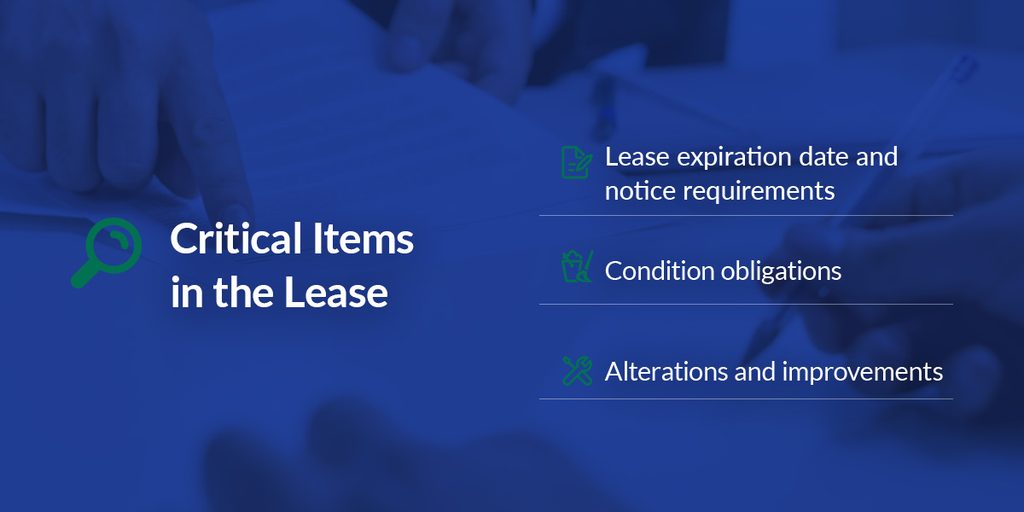
- Lease expiration date and notice requirements: Confirm your lease’s end date and the amount of advance notice you must give your landlord. Missing the deadline can trigger an automatic renewal or put you into a month-to-month holdover situation at significantly higher rates. If the lease language is vague or self-contradictory, contact your landlord or property manager in writing to request clarification and keep their response on file.
- Condition obligations: Some leases require you to remove or reverse all improvements you made during your tenancy. Others specify a broom-clean standard, which typically means taking out all personal property and sweeping the floors while leaving specific fixtures in place.
- Alterations and improvements: If you installed or modified anything during your lease term, your lease may require you to restore the space or equipment to its original configuration. Do a walk-through with photos from your original move-in day and create a written list of every alteration, so you can budget accurately for removal and restoration work.
Commercial lease agreements are legally binding contracts between building owners and tenants, which means state and local laws require both parties to fulfill their specific terms. Failure to meet move-out conditions may result in the withholding of deposits or additional liability. Once you understand your obligations, prioritize the items with the longest lead times.
- Draft and deliver your formal written notice to the landlord by the required deadline.
- Appoint a project lead within your organization who will manage the entire transition and establish a small move committee to handle department-specific needs.
- Begin a full inventory of what you’ll move to the new location, versus what you will donate or decommission.
Ordering internet and technology services for your new space is one of the most frequently overlooked tasks in the lease transition planning phase. Providers can take longer than you expect to install and configure new lines. Waiting until the last minute risks starting in your office with no connectivity.
Days 60 to 30 — Line up Your Vendors and Landlord
During this phase, you’ll work on two parallel tracks that need to stay coordinated to lock in every moving part before your scheduling window closes.
Start by coordinating your current and new locations. Contact property management and ask about their specific move-in and move-out requirements, including freight elevator reservation procedures, loading dock hours, after-hours access policies, certificate of insurance submission deadlines and any floor or wall protection mandates the building enforces. Some properties require you to submit your move plan in writing and get approval before you can reserve access.
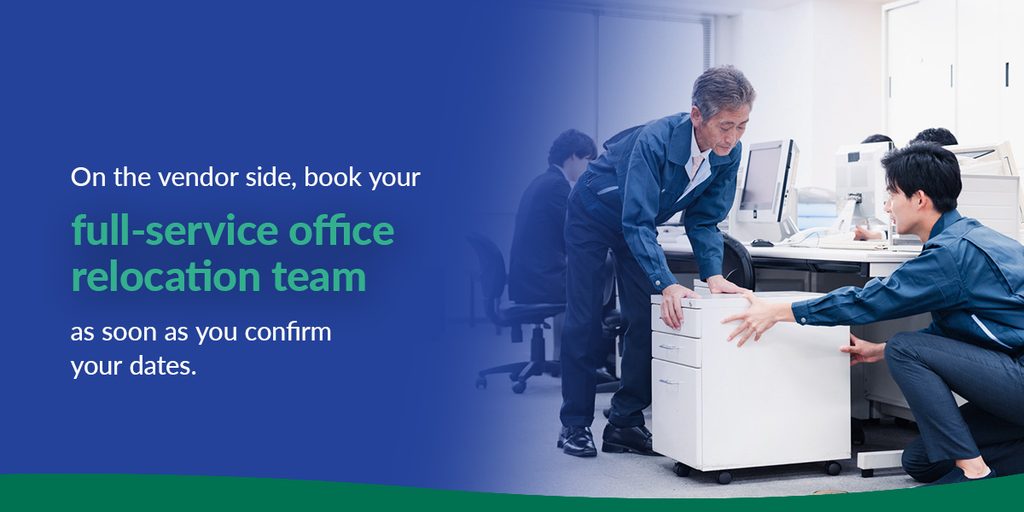
On the vendor side, book your full-service office relocation team as soon as you confirm your dates. During peak season, which often runs from May through September, booking early ensures availability and prevents last-minute rate increases from vendors with limited capacity.
In addition to your moving company, you will need to schedule several other vendors.
- Decommissioning and furniture removal services: If your lease requires you to clear out everything, including workstations, shelves and equipment, you need a team that specializes in office decommissioning services to take care of the removal efficiently.
- IT disconnect/reconnect: You will need to carefully dismantle your technology infrastructure at the old location and rebuild it at your new one. Coordinate timing with your IT team or external provider to handle servers, phones and network equipment properly.
- Furniture installation: Ensure your employees can immediately get to work when they arrive by assembling and positioning new workstations, conference tables and storage systems according to your floor plan.
- Storage solutions: If your move-out and move-in dates do not align perfectly, you will need secure storage to bridge the gap during your transition. Without it, you risk having nowhere to place valuable assets while you’re between locations.
It is wise to build a contingency budget on top of all your vendor estimates, as scheduling conflicts, access delays and scope changes are routine when multiple parties work under tight deadlines. Review each line item in your budget and identify where the scope could expand based on building access restrictions or last-minute requirements from your landlord. Request multiple quotes from vendors to understand the range of potential costs and build your contingency based on the higher end of those estimates for tasks with the most variables.
Finalize your new space floor plan during this phase, so your movers and installers know where to place everything. Communicate the plan to your employees with written timelines and directions for packing their personal items. Specify when they should clear out their workstations and what items they must pack themselves versus leaving them for the moving team to handle.
Days 30 to Zero — Move, Connect and Close Out
Ideally, all your diligence during the previous two stages will pay off during this final execution phase, allowing every employee to walk into a fully operational workspace with no loss of productivity on their first day in the new office.
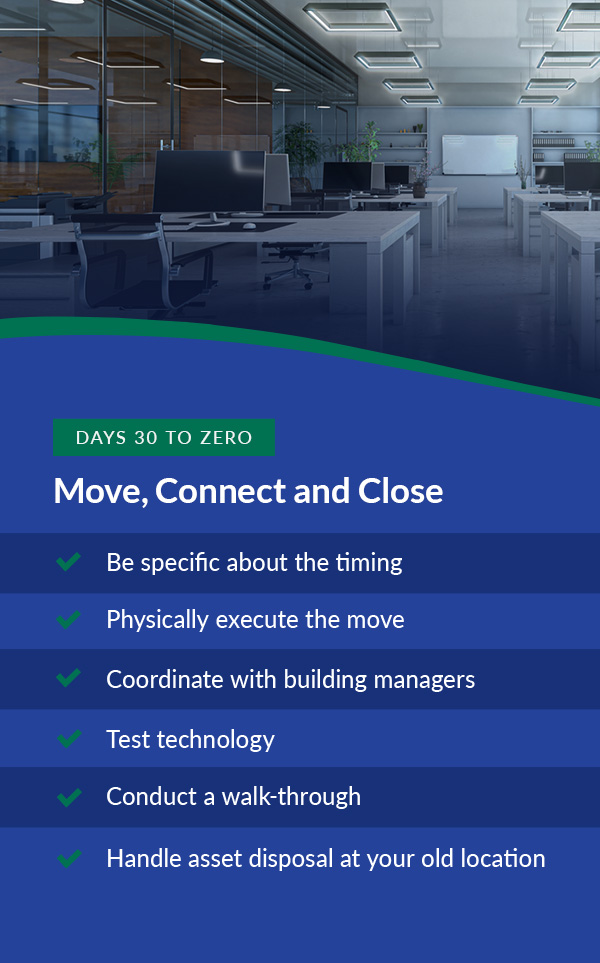
- Be specific about the timing: Confirm all vendor schedules and delivery windows in writing. If your movers promise to arrive Saturday morning, clarify the exact time and how long they estimate the job will take. Label and inventory every piece of equipment by department to ensure nothing gets lost in transit and everything ends up in the correct location.
- Physically execute the move: Choose a window that minimizes business disruption. Most companies plan to begin on a Friday evening and wrap up by Sunday, so employees can return to a ready workspace on Monday. Clear your business calendar of conflicts that might make a weekend move impractical, such as month-end closings, major client deliverables or industry events.
- Coordinate with building managers: Secure the necessary access throughout the entire window. For example, if you want to use the elevator after hours, you may have to submit advance approval requests and reserve specific time slots.
- Test technology: Before the movers arrive at your new location, check network connections, phone systems and internet service to confirm they work. Utilities, including HVAC, power and building access systems, also need to be active. Remember, you can’t resume operations if any of these are still down when your team arrives.
- Conduct a walk-through: Tour the new space with your project management move team before they leave. Confirm that furniture installation at your new location matches the correct positions identified in your floor plan. This final run-through is your chance to address placement issues while the crew is still available to help. For instance, if a workstation blocks a fire exit, the team can reposition items on the spot.
- Handle asset disposal at your old location: Do not wait until after the move to start office decommissioning. Donate, resell or recycle items that are not moving with you before your final walk-through with the landlord.
What Your Lease Requires Before You Hand Back the Keys
Many businesses treat move-out compliance as an afterthought, and that is where security deposits are lost and unexpected bills arrive. Understanding what your lease requires before you vacate protects you from those outcomes.
Most commercial leases include a broom-clean or broom-swept standard. This means all your personal contents must be fully removed, including IT cabling you added during your tenancy, freestanding furniture, workstations, shelves and equipment. If an item was not there when you moved in, and your lease does not specifically allow you to leave it, it needs to go.
Most commercial leases require that spaces be returned with all tenant property and improvements removed. Failure to meet this standard puts your security deposit at risk and can result in additional charges. Typically, landlords can apply security deposits toward decommissioning and cleaning costs and repairs if the space is not returned in the required condition.
Beyond the broom-clean requirement, review your restoration obligations carefully. You may need to:
- Patch and paint the walls where you mounted equipment.
- Remove any exterior or interior signage with your company branding.
- Reverse alterations you made during the tenancy, such as removing partition walls you installed or restoring original lighting configurations.
The hidden costs of office moves often surface during lease closeout when businesses discover restoration requirements they did not budget for. Identifying these obligations during your planning phase gives you time to address them affordably.
For the final landlord walk-through, photograph the space after everything has been removed and cleaned. Document the condition at handoff, so there is a clear record of how you left it. If your landlord identifies issues during the walk-through, address them immediately if possible rather than leaving them unresolved.
Do not forget about utility disconnections. Service providers need adequate advance notice to shut off connections and finalize your account. Contact electric, gas, water and waste services before your move-out date to schedule disconnection.
If you have disposed of assets or donated furniture, keep certificates of disposal or donation receipts. These documents provide proof of responsible disposal for environmental compliance and may offer potential tax benefits if you donated usable items to qualified organizations.
Finally, get written confirmation of lease surrender from your landlord once the space has been inspected and accepted. This document confirms that you have met your obligations and closes out your tenancy. Without it, disputes can arise weeks or months later about the condition of the space or whether you fulfilled your lease terms.
Holdover situations in which tenants remain after their lease expiration can be extremely costly. Carefully planning your office lease exit coordination helps you avoid penalties and increases your likelihood of recovering your full security deposit. Experienced teams know what landlords look for during final inspections and can help you meet the requirements.
Plan a Stress-Free Lease Transition With BMS Commercial Services™

Managing a commercial lease transition requires coordinating relocation, decommissioning, vendor scheduling, furniture installation and secure storage across a compressed timeline. Our company manages all those services under the same roof, with a single, consistent point of contact overseeing the entire process.
Whether you are relocating a solo office or managing a staged transition across multiple locations, we’ll build a coordinated plan around your lease deadline and handle every detail, so your team transitions out of your old office into a perfectly configured workspace without complications.
BMS Commercial Services™ routinely handles seamless, full-service relocations for Fortune 500 corporations, research labs, hybrid teams and rapidly scaling corporations. Our team understands lease closeout requirements and knows how to protect your security deposit. If you need professional support for office lease exit coordination, we are ready to help. Call 833-876-0075 or contact us through our online form to discuss your transition today.