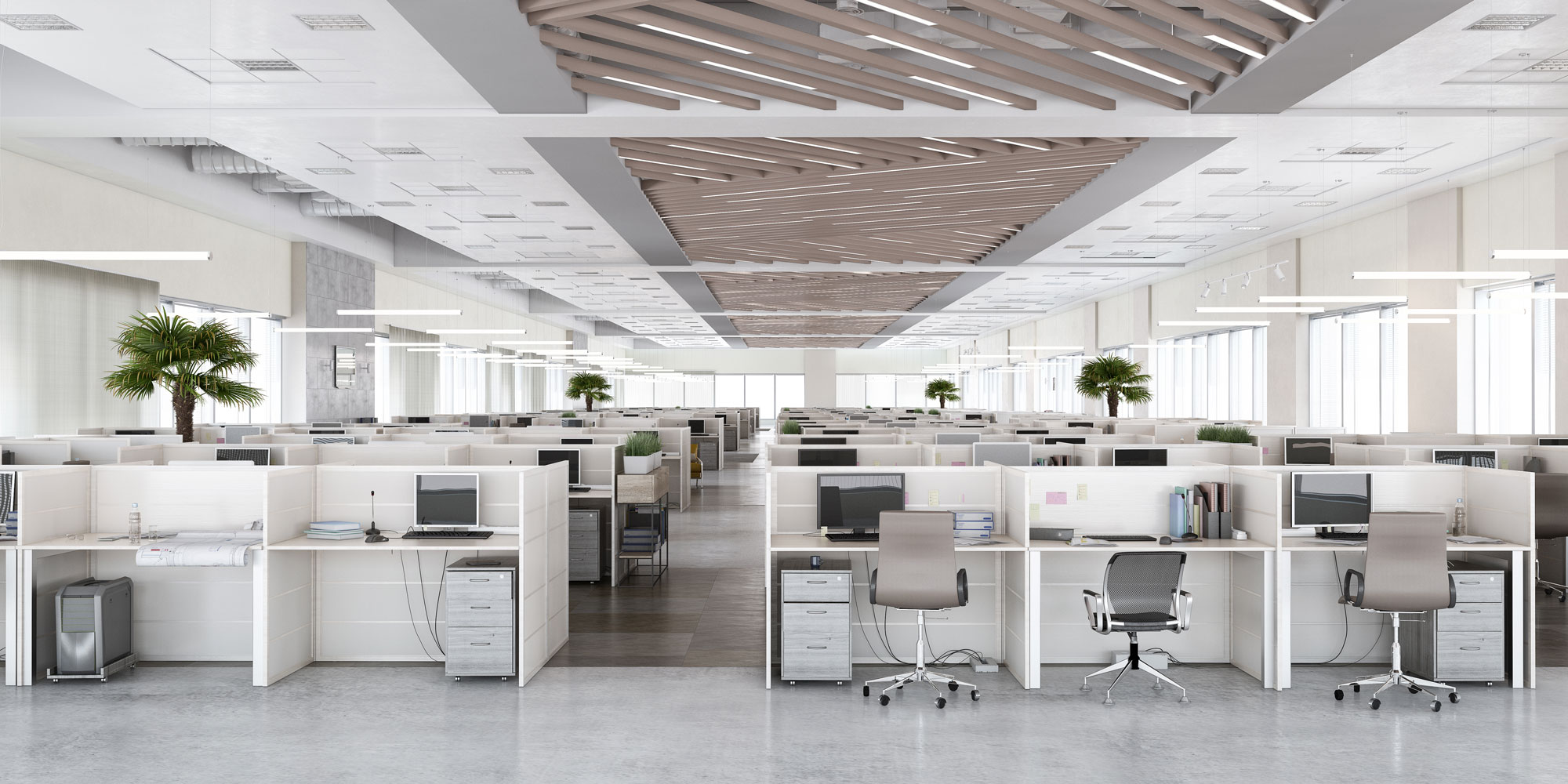

As organizations transition to increased in-office work, the definition of “return-ready” workspaces has fundamentally changed. Today’s return-ready offices balance operational efficiency with employee expectations shaped by remote work experiences. These environments prioritize flexibility, technology integration, and human-centered design to support productivity while addressing new workplace behaviors.
For many organizations, pre-pandemic office configurations no longer align with current business objectives and employee expectations—creating operational inefficiencies that impact bottom-line performance.
How Have Employee Expectations Changed Since the Pandemic?
The pandemic fundamentally transformed workplace expectations in several critical ways:
- Flexibility demand: Employees now expect adaptable environments that support various work styles
- Technology expectations: Seamless digital experiences have become non-negotiable
- Wellbeing prioritization: Physical and mental health considerations directly influence workspace decisions
- Collaboration emphasis: In-person time is increasingly valued for meaningful interaction rather than individual work
- Purpose-driven attendance: Employees seek clear value propositions for office presence
Organizations that fail to address these evolved expectations face significant challenges in talent retention and recruitment.
The Warning Signs Your Office Space Is Holding Your Business Back
1. How Does Low Space Utilization Signal Workspace Problems?
Consistently underutilized office space indicates fundamental misalignment with operational needs:
- Empty areas: Regularly vacant zones represent wasted real estate investment
- Booking disparities: Conference rooms overbooked while desks remain empty
- Time patterns: Predictable attendance fluctuations that leave spaces unused
- Department imbalances: Certain teams avoiding office attendance more than others
- Peak crowding: Occasional overcrowding with regular underutilization
These utilization challenges often indicate workspace designs that no longer serve current business functions.
2. What Productivity Obstacles Result From Outdated Office Layouts?
Outdated office configurations create measurable productivity drains through:
- Workflow interruptions: Frequent disruptions due to inappropriate space allocation
- Collaboration barriers: Physical obstacles preventing effective team interaction
- Technology limitations: Insufficient infrastructure for hybrid meetings and digital workflows
- Acoustic challenges: Noise issues that prevent focused work and effective communication
- Wayfinding inefficiencies: Confusing layouts that waste time and create frustration
These obstacles directly impact employee performance and operational effectiveness.
3. How Does Employee Feedback Reveal Workspace Shortcomings?
Employee sentiment provides critical insights into workspace functionality:
- Attendance reluctance: Resistance to office attendance beyond policy requirements
- Space complaints: Consistent feedback about environmental distractions or discomfort
- Resource frustrations: Reports of insufficient meeting spaces or technology resources
- Environmental concerns: Comments about poor lighting, ventilation, or temperature control
- Comparative disadvantages: References to home environments being more conducive to productivity
Organizations should systematically collect and analyze this feedback to identify improvement opportunities.
4. Why Do Recruitment and Retention Challenges Connect to Office Environments?
Workplace environments increasingly influence talent management outcomes:
- Candidate questions: Prospective employees asking detailed questions about workspace configuration
- Competitor comparisons: Current employees referencing superior competitor workspaces
- Exit interview patterns: Departing employees citing workplace environment as a contributing factor
- Talent competition: Difficulty attracting candidates when competing with organizations offering superior workplaces
- Generational preferences: Younger employees demonstrating stronger preferences for modern workspaces
Forward-thinking organizations recognize workplace design as a critical element in talent strategy.
5. How Do Operational Inefficiencies Manifest in Outdated Workspaces?
Suboptimal workspaces create measurable operational drains:
- Space cost inefficiencies: Maintaining unnecessary square footage
- Energy waste: Heating, cooling, and lighting underutilized areas
- Technology duplication: Redundant systems for in-office and remote workers
- Maintenance burdens: Upkeep requirements for outdated infrastructure
- Adaptation costs: Expenses for temporary solutions to fundamental design problems
These inefficiencies represent significant opportunity costs that impact financial performance.

4 Core Questions to Ask for a Return-Ready Office
1. How Does Spatial Flexibility Support Modern Work Patterns?
Adaptable environments accommodate evolving needs through:
- Modular furnishings: Easily reconfigurable elements that adapt to different activities
- Multi-purpose zones: Spaces designed for various functions throughout the workday
- Scalable areas: Environments that efficiently accommodate fluctuating occupancy
- Technology integration: Infrastructure that supports various work modes
- Zoning strategies: Thoughtful designation of areas for different work activities
This flexibility allows organizations to adapt quickly to changing operational requirements.
2. Why Is Technology Infrastructure Critical for Return-Ready Offices?
Robust digital infrastructure enables seamless operations through:
- Hybrid meeting capabilities: Purpose-built spaces for connecting in-person and remote participants
- Booking systems: User-friendly platforms for managing space utilization
- Connectivity solutions: Reliable, high-performance network access throughout facilities
- Workplace analytics: Systems that provide actionable data on space utilization
- Environmental controls: Technology that optimizes comfort and energy efficiency
Integrated technology transforms physical spaces into productivity-enhancing environments.
3. How Do Wellbeing Considerations Impact Workspace Effectiveness?
Employee-centered design elements support performance through:
- Ergonomic furnishings: Adjustable workstations that prevent physical strain
- Natural elements: Biophilic design features that reduce stress and improve focus
- Air quality measures: Ventilation systems that maintain healthy environments
- Acoustic management: Sound control strategies that reduce cognitive load
- Respite areas: Designated spaces for relaxation and rejuvenation
These elements support sustained cognitive performance and reduce absenteeism.
4. What Role Does Brand Expression Play in Return-Ready Workspaces?
Physical environments communicate organizational identity through:
- Value reinforcement: Design elements that reflect company principles
- Cultural signifiers: Spaces that embody workplace culture
- Client impressions: Environments that create appropriate visitor experiences
- Team cohesion: Spaces that foster belonging and connection
- Recruiting advantage: Workplaces that attract talent through physical expression of company culture
Intentional brand expression transforms offices from mere functional spaces into strategic assets.
How Should Organizations Approach Office Readiness Assessment?
A comprehensive readiness evaluation includes:
- Current state analysis: Objective assessment of existing conditions and utilization patterns
- Stakeholder engagement: Structured gathering of employee, leadership, and client perspectives
- Operational mapping: Documentation of workflow patterns and space requirements
- Future-state visualization: Development of scenarios based on strategic objectives
- Implementation roadmapping: Creation of phased approach to workspace transformation
- ROI modeling: Quantification of expected returns on workspace investments
This systematic approach ensures workspace decisions align with broader organizational objectives.
How Can BMS Commercial Services Support Your Return-Ready Transformation?
BMS Commercial Services delivers comprehensive workplace solutions through:
- Workplace assessment: Detailed evaluation of current conditions and improvement opportunities
- Strategic planning: Development of workspace strategies aligned with business objectives
- Design solutions: Creation of environments that support productivity and engagement
- Implementation management: Coordination of construction, furnishing, and technology deployment
- Change support: Facilitation of employee transition to new workspace configurations
- Ongoing optimization: Continued refinement based on utilization and performance data
Our experienced team helps organizations transform outdated workspaces into environments that attract talent, enhance productivity, and support operational excellence.
How Does Office Readiness Create Competitive Advantage?
It’s no doubt office readiness directly impacts organizational performance. By transforming outdated workspaces into environments aligned with current operational needs and employee expectations, organizations can significantly enhance productivity, talent acquisition, and operational efficiency.
The most successful organizations recognize that physical workspaces are strategic assets that require thoughtful investment and ongoing optimization. Through partnerships with workplace experts like BMS Commercial Services, these organizations create environments that support their business objectives while providing compelling reasons for employees to engage in in-person collaboration.
For more information on how BMS Commercial Services can help assess and transform your workspace for maximum effectiveness, contact our team!